
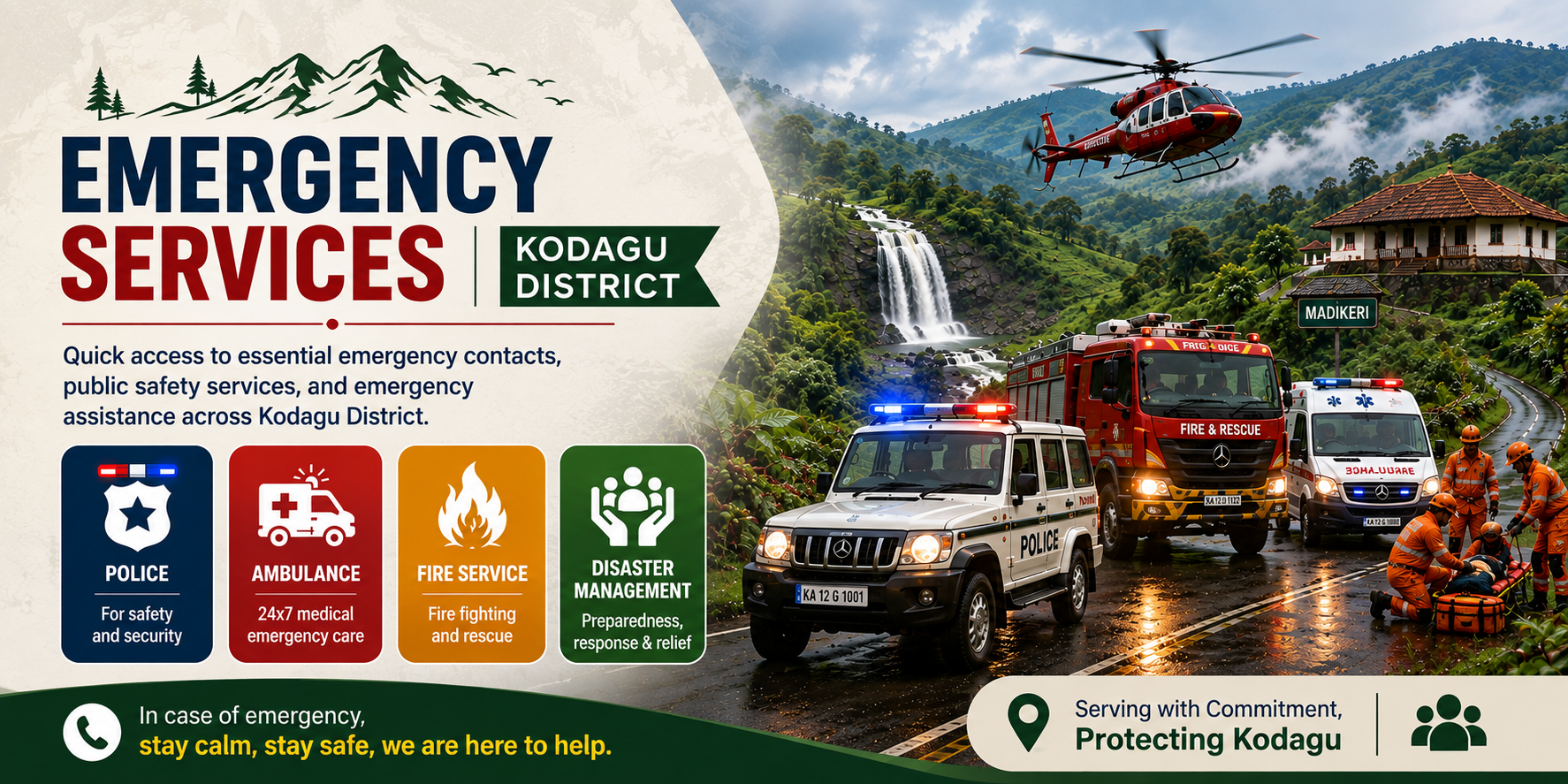
Kodagu District Emergency Services
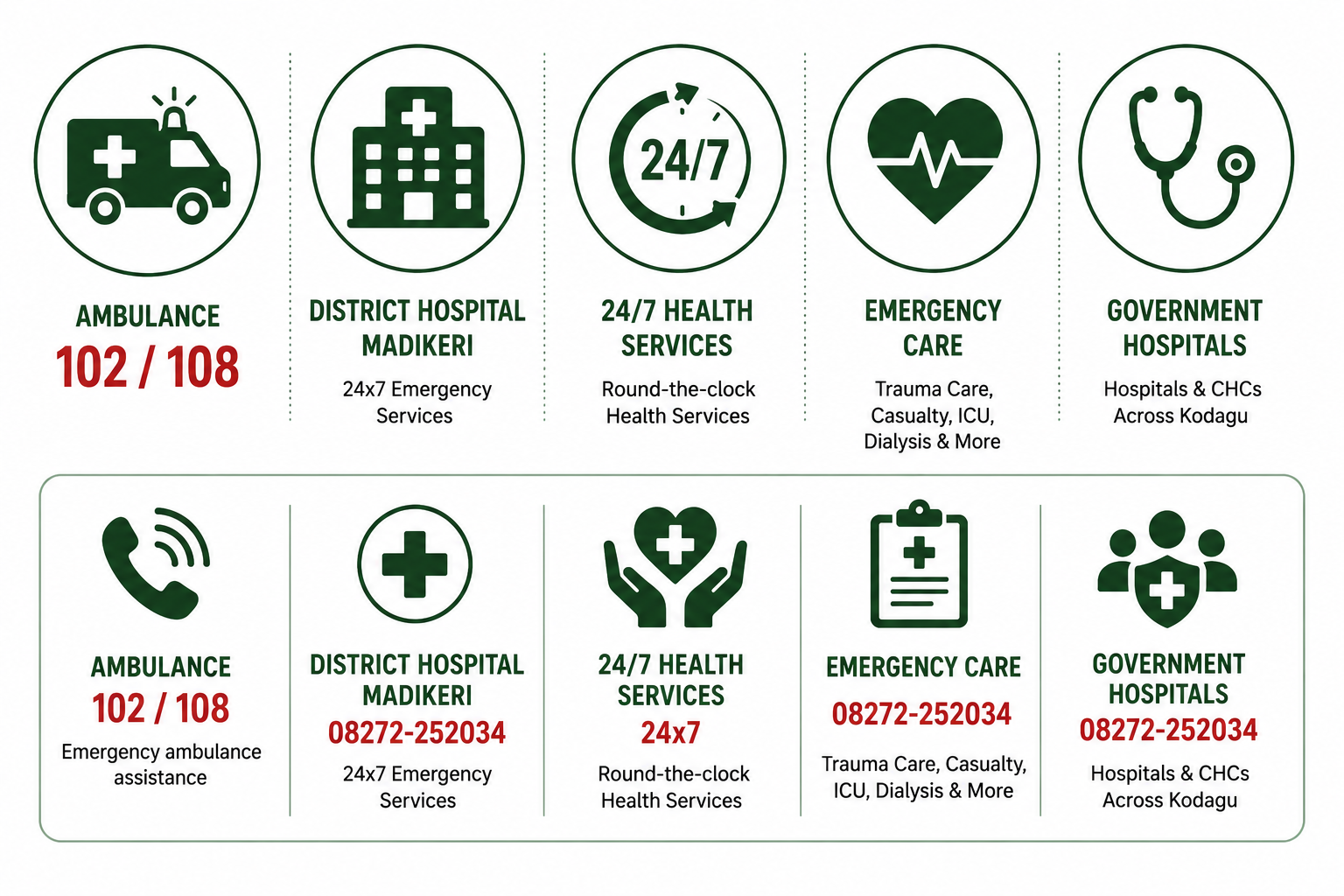
Emergency Health Services
- Ambulance: 102 / 108 — Emergency ambulance assistance across Kodagu District.
- District Hospital, Madikeri: Provides casualty and trauma-care services along with critical healthcare facilities.
- 24/7 Health Services: Selected Primary Health Centres provide round-the-clock maternal and healthcare services.
- Emergency Care: District Hospital Madikeri has casualty, trauma care, neonatal intensive care, dialysis, and laboratory facilities.
- Government Hospitals: General Hospitals at Somwarpet and Virajpet, along with Community Health Centres across the district, provide healthcare services.
Essential Safety Guidelines
Stay safe and informed while travelling, working, or living in Kodagu District. The district’s hilly terrain, heavy monsoon rainfall, forests, and wildlife areas require extra care and awareness.
During Monsoon: Avoid travelling through landslide-prone roads and follow official weather and travel advisories.
Road Safety: Drive carefully on winding and slippery hill roads, especially during heavy rain and fog.
Wildlife Safety: Maintain a safe distance from elephants and other wild animals. Do not enter restricted forest areas.
Waterfall Safety: Avoid entering strong currents or restricted areas around waterfalls and rivers.
Emergency Contacts: Keep important emergency numbers and local hospital contacts readily available.
Travel Preparedness: Carry essential medicines, identification, drinking water, and a charged mobile phone while travelling to remote areas.
Disaster Awareness: Follow instructions from district authorities during landslides, floods, storms, or other emergencies.
Respect Nature: Avoid littering, protect forests and wildlife, and follow responsible tourism practices.
- Fire Safety
- Floods
- Drought
- Earthquakes
- Heat Waves
- Cyclones
Fire Safety
Fire safety is especially important in Kodagu District, where homes, coffee plantations, forests, commercial establishments, and tourist areas require proper precautions. Following basic safety measures can help prevent fires and protect lives, property, and the environment.
Prevent Fires: Keep electrical wiring, cooking areas, and heating equipment in safe working condition.
Kitchen Safety: Never leave cooking unattended and keep flammable materials away from stoves and open flames.
Electrical Safety: Avoid overloaded sockets and damaged electrical wires. Switch off appliances when not in use.
Forest & Plantation Safety: Do not throw burning cigarettes, matches, or other flammable materials in forests or coffee plantations.
Emergency Response: In case of fire, move to a safe location and immediately contact the Fire & Emergency Services.
Fire Extinguishers: Keep suitable fire extinguishers readily accessible in homes, offices, hotels, shops, and other public buildings.
Evacuation: Know the nearest emergency exit and never use lifts during a fire.
Stay Calm: Avoid panic, alert people nearby, and follow instructions from firefighters and emergency personnel.
Prevent Fires • Protect Lives • Keep Kodagu Safe
Flood Safety
Kodagu receives heavy rainfall during the monsoon season, and some areas may experience waterlogging, overflowing streams, flooding, and landslides. Following basic safety precautions can help protect lives and property.
Stay Informed: Follow weather alerts and instructions issued by the Kodagu District Administration.
Avoid Flooded Roads: Do not walk or drive through fast-moving or deep floodwater.
Move to Higher Ground: If flooding occurs, move to a safe elevated location as advised by authorities.
Stay Away from Rivers: Avoid rivers, streams, bridges, and low-lying areas during heavy rainfall.
Protect Electricity: Stay away from fallen electrical wires and switch off electricity if it can be done safely.
Keep Emergency Supplies: Keep drinking water, medicines, a torch, mobile phone, and essential documents ready.
Follow Evacuation Orders: Leave immediately if authorities instruct residents to evacuate.
Help Vulnerable People: Assist children, elderly people, and persons with disabilities in reaching safe locations.
Stay Alert • Move to Safety • Stay Informed
Drought Safety & Water Conservation
Although Kodagu receives significant rainfall, dry periods and irregular rainfall can create water shortages, affecting households, agriculture, and plantations. Careful water management and conservation can help communities prepare for such conditions.
Save Water: Avoid unnecessary water usage and repair leaking taps and pipelines.
Rainwater Harvesting: Collect and store rainwater for household and agricultural needs.
Protect Water Sources: Keep streams, ponds, wells, and other water sources clean and protected.
Support Agriculture: Use water-efficient irrigation methods and plan crops according to available water.
Avoid Wastage: Reuse water wherever practical, especially for gardening and other non-drinking purposes.
Protect Forests: Preserve trees and vegetation that help maintain soil moisture and local water resources.
Prepare for Dry Periods: Store essential drinking water safely when prolonged dry conditions are expected.
Follow Official Advisories: Follow guidance from local authorities regarding water use and conservation.
Save Water • Protect Nature • Prepare for Dry Periods
Earthquake Safety
Earthquakes can occur without warning, so being prepared and knowing how to respond can help protect lives and reduce injuries. During an earthquake, remain calm and follow basic safety precautions.
Drop, Cover & Hold: Drop to the ground, take cover under a sturdy table or desk, and hold on until the shaking stops.
Stay Indoors: If you are inside, remain there and move away from windows, glass, and heavy objects.
If Outdoors: Move to an open area away from buildings, trees, electric poles, and other structures.
Avoid Lifts: Do not use elevators during or immediately after an earthquake.
After the Shaking: Check for injuries and hazards such as damaged buildings, gas leaks, or fallen electrical wires.
Be Prepared: Keep an emergency kit with water, medicines, a torch, important documents, and a charged mobile phone.
Follow Authorities: Listen to official instructions and avoid entering damaged buildings until they are declared safe.
Stay Alert: Be prepared for possible aftershocks and move to a safe location if necessary.
Stay Calm • Drop, Cover & Hold • Stay Safe
Heat Wave Safety
During periods of unusually high temperatures, heat can affect health, especially for children, older adults, outdoor workers, and people with existing health concerns. Follow these precautions to stay safe:
Stay Hydrated: Drink water regularly throughout the day and carry water when travelling.
Avoid Peak Heat: Limit outdoor activities during the hottest part of the day whenever possible.
Stay Cool: Remain in shaded, well-ventilated, or cooler areas during extreme heat.
Wear Suitable Clothing: Choose lightweight, loose-fitting clothing and use a hat or umbrella when outdoors.
Protect Children & Elderly: Check regularly on children, older adults, and others who may be more vulnerable to heat.
Never Leave Anyone in Vehicles: Avoid leaving children, elderly people, or pets inside parked vehicles.
Take Breaks: Outdoor workers should take regular breaks in shaded areas and drink water frequently.
Seek Medical Help: If someone becomes seriously unwell due to heat, move them to a cooler place and seek immediate medical assistance.
Stay Cool • Stay Hydrated • Stay Safe
Cyclone Safety
Although Kodagu is inland, strong weather systems and heavy rainfall can still bring strong winds, intense rain, fallen trees, and local flooding. Staying informed and following official instructions can help keep communities safe.
Stay Informed: Follow weather alerts and instructions from the district administration and disaster management authorities.
Secure Property: Keep doors and windows closed and secure loose outdoor items that could be blown away.
Avoid Travel: Avoid unnecessary travel during severe weather, especially through forest roads and areas prone to falling trees or landslides.
Stay Indoors: Remain inside a safe, sturdy building during strong winds and heavy rainfall.
Stay Away from Trees & Poles: Avoid standing near trees, electric poles, hoardings, and other structures that may fall.
Prepare an Emergency Kit: Keep drinking water, medicines, a torch, power bank, essential documents, and basic supplies ready.
Protect Electricity: Stay away from fallen electrical wires and report them to the concerned authorities.
Follow Evacuation Orders: Move to designated safe shelters or higher ground if instructed by authorities.